Three weeks ago Spider-Man: Brand New Day posted the biggest opening weekend ever recorded, and this weekend it goes after the second-biggest domestic total ever recorded, with $42.4 million the number that decides whether it gets there by Sunday. Underneath it, five wide releases open at once into the emptiest chart of the month, led by a horror sequel arriving with the best reviews the series has had since the first film.

Spider-Man: Brand New Day
Spider-Man: Brand New Day stands at $803,929,225 through Tuesday, which is already fourth on the all-time domestic list, and Spider-Man: No Way Home’s $814,811,535 falls today or tomorrow. That leaves Avengers: Endgame at $858,373,000 and Star Wars: The Force Awakens at $936,662,225, and one of those could be going down as soon as this weekend.
Monday and Tuesday saw declines of -55% and -51% week over week, pretty even with the -51% third weekend drop. Looking at comps, Endgame went -52.7% into $29,973,505 in its fourth frame and Force Awakens went -53.1% into $42,353,785, and Brand New Day has been running a shade ahead of that curve so far. We’re expecting its smallest drop so far, somewhere between -40% to -50%, which puts us at $35–42M, close to jumping above Endgame’s total on the high end of that.
$42M is doing double duty this weekend, because Force Awakens’ $42,353,785 is also the fourth-biggest fourth weekend of all time. Above it sit Avatar’s $50,306,217, Avatar: The Way of Water’s $45,838,986 and Top Gun: Maverick’s $44,655,075. This is a film that already owns the biggest opening weekend, the biggest opening day and the biggest preview night ever recorded; a top-five fourth weekend is just icing on the cake.
Our model moved its prediction to $906.9M–$981.8M with a $944.9M midpoint on 2.62x legs, and we are willing to go a step further than the model here: it feels basically locked in that Brand New Day takes the all-time domestic crown, finishing north of $950 million. The pacing has been ahead of the record the whole way, with Force Awakens sitting at $758,198,252 through its own nineteenth day, which puts Brand New Day $45.7 million clear at the identical point in the run. Force Awakens spent its second and third weekends inside the Christmas and New Year corridors, gaining back ground on Brand New Day but not enough to retake the lead. Even a $35M weekend here still leaves Brand New Day around $38M ahead, and we don’t see Force Awakens catching up. We have the two tracked side by side on our Brand New Day vs The Force Awakens comparison, and the shape of it puts $936,662,225 falling in the back half of September.
$1 billion is the call we are not making yet, and at this point it’ll likely fall short of that. Worldwide is $2.04 billion, eighth all time, with Avengers: Infinity War at $2,052,000,000 and Force Awakens at $2,068,223,624 both inside a single weekend’s global take, so by Sunday this is a top-six worldwide release and a top-three domestic one, twenty-four days in.

Insidious: Out of the Further
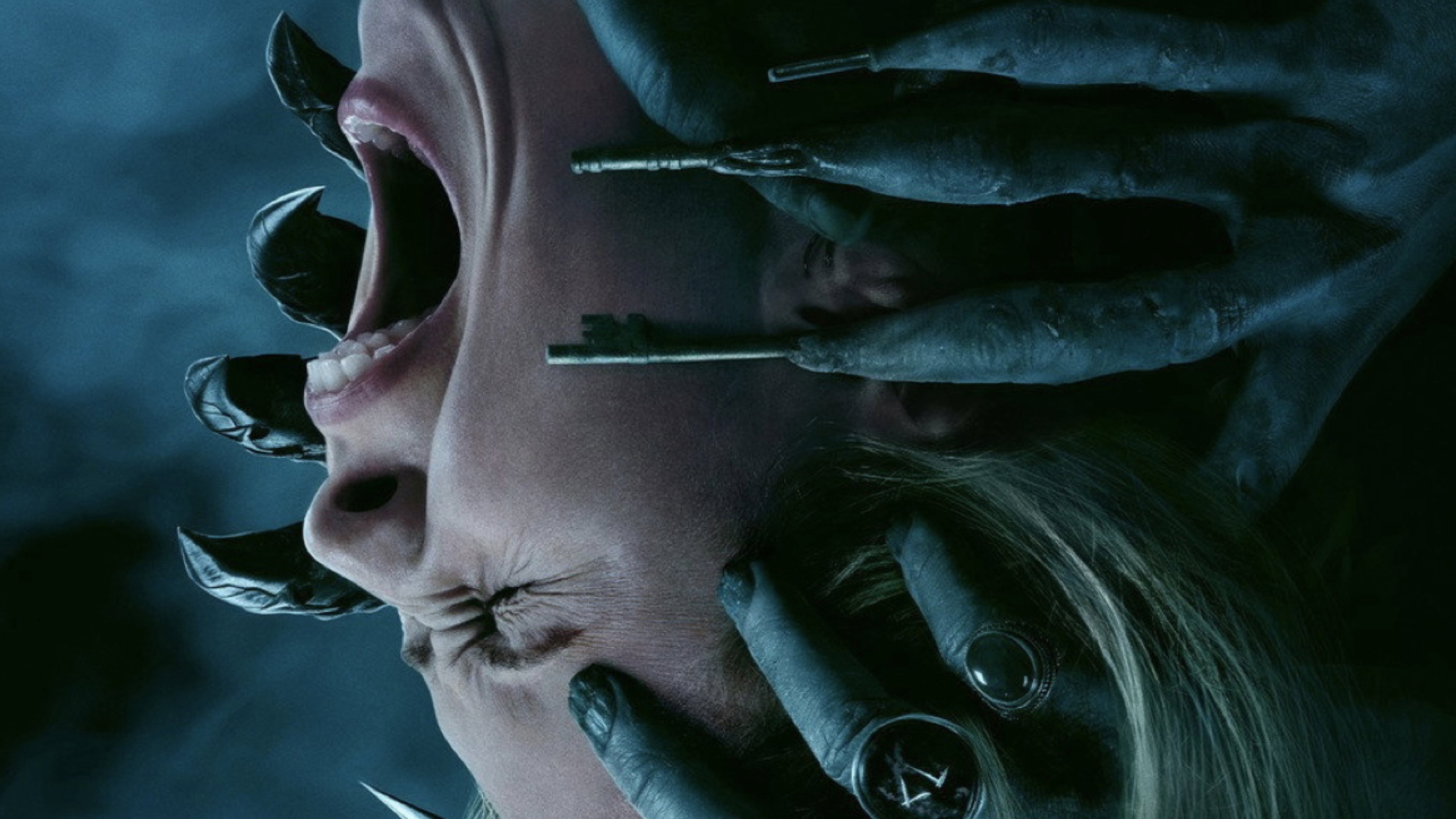
The trades have Insidious: Out of the Further at $23–28M, Variety has it at $25M, and Boxoffice Pro revised its own long-range up to $26–34M on Tuesday. We are calling $24–28M, which takes the top half of the trade band without following Boxoffice Pro out to its ceiling. The reason to sit up there rather than in the middle is the one number nobody had a month ago, a 61% Tomatometer on 56 reviews, which is the best this series has scored since the 2010 original’s 66%, ahead of Insidious: The Red Door at 59%, Insidious: Chapter 2 at 38% and Insidious: The Last Key at 34%. Horror sequels rarely get graded on reviews at the opening line, but they do get graded on whether the last one burned the audience, and this one arrives with critics saying it did not.
It is also walking into the strongest horror market in years. 2026 has produced just over a billion dollars of domestic horror business across twenty-two releases, led by Obsession, which opened to $17,196,855 in May and legged an absurd 15.3x to $263,451,715 domestic and $495.7M worldwide on a $15M budget, the kind of run the genre turns out about once a decade. Behind it, Backrooms opened to $81,402,424 on the way to $197,516,044, Scream 7 opened to $63,615,172 and finished $121,935,967, Scary Movie 6 took $108,277,762 off a $54,336,626 start, and even the mid-tier entries cleared their costs comfortably, with Evil Dead Burn at $32.2M and Lee Cronin’s The Mummy at $29.1M off openings in the $13M range. What that year has not had recently is anything actually playing, since no horror title has been inside the top ten since Evil Dead Burn finished eighth on the August 2 frame, which means an audience that has turned out for everything 2026 has put in front of it has been sitting on its hands for three straight weekends. At $26M this opens bigger than every 2026 horror release except Backrooms, Scream 7 and Scary Movie 6, and at $33,013,036 it passes The Red Door for the second-biggest opening in franchise history, which is the mark worth watching on Friday night.
On $18 million against roughly 3,000 sites the theatrical run turns profitable somewhere around the second weekend whatever the multiplier does after that, and the multiplier is unlikely to be generous. The Red Door dropped -60.6% in weekend two and legged 2.49x to $82.2M, while The Last Key dropped -58.0% and legged 2.29x to $67.7M. Put a $28M opening through those legs and you land at $65–70M domestic, which for this series is a completely normal outcome and, on this budget, a very good one.

The Odyssey
The Odyssey is at $512,804,585 through Tuesday and the domestic markers fall in a row from here, with Star Wars: The Rise of Skywalker’s $515,202,542 going today and Rogue One at $532,200,000 and The Dark Knight at $533,345,358 both going on Saturday. The second of those carries the weight, because it makes this Christopher Nolan’s biggest domestic release, eighteen years after the film that has held the spot for him. We had a -40% fifth weekend penciled in last Wednesday and it held -26% instead, so the weekday reads are the better guide now, and Monday and Tuesday came in at -29% and -28% against last week, tighter than the weekend itself was.
Worldwide is where the bigger record sits, because $1.30 billion through last weekend’s international reporting leaves it roughly $38 million short of Deadpool & Wolverine’s $1.338 billion, which has been the biggest R-rated release of all time since 2024, and a sixth weekend of any shape takes it. By Sunday night a 172-minute R-rated Homer adaptation is the highest-grossing R-rated release ever made, and we have it going on to $1.6 billion or better before it is done.
Domestically those same two films finish the other way round, which is the more interesting half of the story. The Odyssey already sits second on the all-time R-rated domestic list at $512,804,585, well ahead of The Passion of the Christ’s $370,274,604, and $600M is genuinely live from here: weekend drops of -27%, -43%, -38% and -26% describe a curve that reaches it in late September, and our model’s inner band already runs to $609M. That leaves Deadpool & Wolverine’s $636,745,858 as the only R-rated release ahead of it domestically, which is the same film whose worldwide crown it takes this weekend. We expect another -25% to -30% drop for $16–18M, a shade under the trades given that five wide releases are opening into these screens and another theater cut is coming after last week’s 386, and we expect the legs to keep behaving this way deep into September, because nothing between now and Labor Day is aimed at this audience and IMAX has not let go of the title.

PAW Patrol: The Dino Movie
The franchise has run this exact test twice and got the same answer both times, with PAW Patrol: The Mighty Movie falling -50.2% in its second weekend to $11,330,072 and PAW Patrol: The Movie falling -49.4% to $6,656,341, and the 2021 film did that on the August 20–22 frame, the same calendar slot PAW Patrol: The Dino Movie is dropping into now, which puts par at around $10.1M. The case for better than par is the A CinemaScore, the 96% audience score and the fact that nothing family-facing opens against it; the case for worse is that another chunk of the country goes back to school this week, and this is the audience that feels that first.
The model wants $72.0M–$80.0M on 3.71x legs, which is asking for a lot more than Mighty Movie’s 2.87x delivered off a bigger start. A -45% hold this weekend keeps that alive; a -52% points at $60–65M instead. None of it is the real story on this title anyway, because $48.5 million is already banked across roughly thirty overseas territories against $24.0M domestic. $150M worldwide is the number this movie is actually chasing, and it is comfortably on that line.

The End of Oak Street
The End of Oak Street opened at $21,010,488 and now has to show that the number was a floor rather than a ceiling, and the shape of that opening weekend argues for the second reading. Friday did $7,929,394 and Saturday came back at $7,377,756, a 7% decline on the day a wide PG-13 release is supposed to build, and while PAW Patrol was flat across the same two days, Oak Street was the only title in the top five that actually shed audience. Put that alongside a B CinemaScore and a 78% audience score against an 86% Tomatometer and the read is word of mouth rather than scheduling, which points at a hold in the low -50s rather than the -40s a genuinely well-liked August original would produce.
Call it $10M and about $42M through ten days. The model still carries $50.2M–$58.2M on 2.58x legs from the opening-weekend baseline, and a -50% weekend keeps the bottom of that inner band intact while quietly ending the argument about the top of it. On an $85M net budget with $26.0M already banked internationally and China, Japan and Germany still ahead of it, $50M domestic and $130–150M worldwide is the outcome that keeps this from becoming a real problem for Warner Bros., which is a long way from the blockbuster the studio wanted and a long way from the disaster the tracking implied a month ago.

Mutiny
Jason Statham has two gears at this budget and Mutiny is landing in the lower one. The Beekeeper opened to $16.6M and finished $66.2M domestic and $162.6M worldwide on the same $40M, and A Working Man opened to $15.5M on the way to $37.0M and $89M, but both of those were January and March plays with a clear lane in front of them. The closer structural match is Wrath of Man, which opened to $8.1M and did most of its $104M worldwide overseas, and a 47% Tomatometer on 34 reviews puts this in that second group rather than the first.
Roughly 2,700 sites is a soft wide release even on a five-opener weekend, and it is landing in the last full frame before Labor Day with a $360M-opening superhero movie still holding the premium screens. Boxoffice Pro’s long-range had $8–12M and Box Office Theory has come down to $5–8.5M this week, and we are lower still at $4–7M, because a 47% Tomatometer, a soft theater count and the busiest opener slate of the month is not a combination that produces double digits. On $40M that means the international run and the platform sale have to carry it, and for a sense of how far the floor drops in this corner of the market, The Furious opened to $2.8M in June and finished $6.5M.

Spa Weekend
Jon Lucas and Scott Moore wrote and directed Bad Moms, which opened to $23.8M in July 2016 and legged 4.76x to $113.3M on a $20M budget off an A- CinemaScore, and that is the comparison every writeup of Spa Weekend is going to reach for, but it is the wrong one. Bad Moms was a mid-summer STX release with a full studio campaign behind it and a genuine hole in the calendar to open into, where this is a different beast entirely: a late-August drop from Black Bear, a distributor that has not opened a film above $3 million all year. In the Grey opened to $2,926,879 on a $60M budget and finished $5.7M, and The Rivals of Amziah King managed $1,024,646 on 632 sites last weekend. Boxoffice Pro has $5–7M and we are under it at $4–6M. What makes this worth watching past Friday is that it is the only comedy going wide this month, and adult-female comedies are the format that most reliably outruns an opening, so an A- on Friday night and a 4x multiplier turns $5M into a $20M finish and a profitable movie.

Tony
The best number on last weekend’s chart did not belong to a wide release at all. Tony went from six sites to thirty-seven and took $706,676, up 102% week over week, for a $19,099 per-theater average that beat everything on the board, including the $16,800 Teenage Sex and Death at Camp Miasma managed on 54 screens. A24 breaks it wide on Friday behind a 94% Tomatometer, a 92% audience score and a 75 Metacritic. Boxoffice Pro is at $7–10M, which we read as the ceiling rather than the call, because platform titles almost always give a chunk of that average back the moment they hit a thousand screens and this is a biography with no franchise behind it. $4–7M is the range, and the multiplier after it is where a film like this makes its money.
Down the chart. Neon opens It Ends the same day, which makes this a two-horror weekend with the review scores upside down: Alexander Ullom’s SXSW debut carries a 94% Tomatometer against the Insidious sequel’s 61% and will do a fraction of the business. Eighty-nine minutes, almost all of it inside a car, on a first-time director’s name puts $2–4M in range, and the per-screen average is the number to read on this one rather than the total. Focus has Hot Spot, Agnieszka Smoczyńska’s R-rated sci-fi thriller with Noomi Rapace, which is a festival title getting a theatrical courtesy rather than a play for the chart. Behind them, SIX: The Musical Live! and The Brink of War both keep going on community and event bookings rather than walk-ups, and One Night Only is finished after a -64% second weekend to $2,003,860, with $15M domestic now out of reach on a $25M budget.
Looking ahead. August closes with four wide releases on the 28th and none of them are built to take #1: Coyote vs. Acme finally reaches theaters through Ketchup Entertainment with Boxoffice Pro at $5–11M, alongside Cliffhanger from Row K, The Dog Stars at 20th Century and Focus’ Finding Emily. That sets up a fifth weekend at #1 for Spider-Man: Brand New Day unless this weekend goes badly wrong, and it puts the Force Awakens domestic record on the board for the back half of September.
Spider-Man: Brand New Day took a fourth weekend at #1 with $39 million and finished just $3,472,000 short of Endgame, which it will pass in the next day or so. Meanwhile, Insidious opened well to $25M and The Odyssey had a tiny 17% drop as it passed The Dark Knight’s final to become Nolan’s biggest movie.
Spider-Man: Brand New Day
$39M and a 45% drop is a strong result for Brand New Day’s 4th weekend, sending it to over $850M as it continues to climb the record books. That’s only slightly below The Force Awakens’ $42M and well above Endgame’s $30M on their respective 4th weekends and percentage-wise is stronger than both. Endgame shed -52.6% into its fourth weekend and Star Wars: The Force Awakens shed -53.1%.
With Labor Day long weekend coming up, you can expect Spidey to continue to hold as it heads towards the $936M all-time record held by The Force Awakens. We’ve already mentioned it a few times before, but Brand New Day is still over $40M ahead of The Force Awakens at the same point in its run, and that’s enough padding to keep its lead, pass TFA, become the biggest domestic film of all time, and hit $950M. Worldwide crossed $2.22 billion, which is sixth all time. It should end up at #3 all-time worldwide, with around $2.5B.
Insidious: Out of the Further
Insidious: Out of the Further landed at $25.3 million, right around where we were seeing it coming into the weekend. This is a good result but not at franchise highs, with the 4th best opening, behind The Last Key’s $29.6M, The Red Door’s $33M, and Chapter 2’s $40.3 million. Even if it’s not reinvigorating the franchise, it’s still doing solid business here.
The legs on these films are relatively consistent, so we should expect something around 2.2-2.4x the opening weekend, getting it to $50M+. For comparison, The Red Door ran 2.5x, The Last Key 2.3x, Chapter 2 2.08x. On an $18 million budget, with $35 million already banked internationally, this is healthy profit for Sony on top of the boatloads of cash they are currently minting thanks to Spider-Man.
The Odyssey
The Odyssey had its best hold yet, just a 17% drop, hitting $19.5 million in week six with five new releases opening against it. That is a ninth-place all-time sixth weekend, and it is doing it in the back half of August while almost everything above it was riding Christmas and New Year: Avatar, Frozen, Titanic, Wicked. IMAX is a key reason for the small drop, as those theatres are still packed and now contributing over 50% of the overall gross this weekend at $10M, with IMAX contributing over $180M to the domestic total now, which is an all-time record for the format.
Two milestones were crossed this weekend: Deadpool & Wolverine’s $1.338 billion worldwide total went down, so a 172-minute R-rated Homer adaptation is the highest-grossing R-rated release ever made, now at $1,446,195,000, on its way to at a minimum, $1.6B, which gets it into the top 15 of all time worldwide. Domestically, The Dark Knight’s $533,345,358 fell on Saturday, which makes this Christopher Nolan’s biggest domestic release eighteen years after the film that held the spot. Worldwide, it already had that title by a large margin.
The weekend drops now read -27%, -43%, -38%, -26%, -17%. With these small drops, it now easily gets it to $600M+. It could even be a close race to top Deadpool & Wolverine’s $636,745,858 domestic if it gets a nice Labor Day weekend bump and keeps IMAX screens.
PAW Patrol: The Dino Movie
PAW Patrol: The Dino Movie went -55% to $9.1 million, the steepest second weekend the franchise has had, against The Mighty Movie’s -50.2% and The Movie’s -49.4% on this same August frame in 2021. That’s maybe to be expected as the franchise goes on, but it’s still on the steeper side for a kids film.
The A CinemaScore and 96% audience score will hopefully help it hold better in the coming weeks and make it to $60M or so. Worldwide is at $83.9 million with $48.5 million of it from overseas. Next week it’ll pass $100M and will try and make it close to $150M by the end of the run.
The End of Oak Street
We were hoping for a better hold here as well, but The End of Oak Street ended up falling an ok 57% for about $38 million over 10 days, signalling only so-so word of mouth for this one. Our model now reads $48.2M–$60.2M as the likely final range domestically on an $85 million net budget. $38.1 million is already banked internationally for $76.1 million worldwide with China, Japan and Germany still in front of it, so it could still find its way to $130–150 million globally when all is said and done. Not enough to turn a profit (unless it finds an audience on streaming), but not a disaster either.
Mutiny
We were at $4–7M, and Mutiny beat that by half a million at $7.5 million. The comp we picked was the right one: Wrath of Man opened to $8,309,007 and did most of its $104 million worldwide overseas, which will likely be the case here too. A B+ CinemaScore matches both The Beekeeper and Statham’s January release, so the audience that came got what it paid for; 64% of it was over 35.
Lionsgate took US rights for around $15 million against roughly $20 million of P&A, a structure built to earn out on international and platform sales, and a $7.5 million start clears the bar that structure was built around. This is performing exactly the way these Jason Statham action movies always do.
Tony
Tony had a very strong expansion, taking $5,011,611 on 1,642 sites, up 576%, and finished seventh. It also beat Spa Weekend and The Magic Faraway Tree combined, which is a three-week-old platform title out-grossing two of the weekend’s three wide openers together.
The number that matters is Sunday. It gave up 10% off Saturday, the best Sunday hold in the top ten by seven points. Adult audiences are showing up and liking what they’re getting here, so we could see word of mouth continue to help it in the weeks to come. If it can have a nice hold next weekend (or get another theatre expansion), $20M+ could be in range here.
Down the chart. Spa Weekend was the one opener that came in under even a bearish call, taking $3.11 million on 2,009 theaters against our $4–6M. It is still Black Bear’s biggest opening of its first year in the market, ahead of In the Grey’s $2.93 million. Mubi’s Teenage Sex and Death at Camp Miasma added 982 theaters and rose 113% to $1.94 million for $3.68 million in three weeks. And Neon opened It Ends on five screens for $60,512, a $12,102 per-screen average that was the best on the board, with a 96% Tomatometer behind it and a wide break to come. The 25th-anniversary re-issue of The Fast and the Furious took $3.1 million on 1,561 sites, which would have placed ninth on its own.